Search This Blog

Monday, April 30, 2018

DIY Taxidermy - Tanning a Squirrel Hide with Alum

If you have ever been fortunate enough to kill the limber and wily squirrel with archery equipment, you may want to find a way to preserve this trophy.

Because the game I am successful at harvesting with my longbow is quite a accomplishment to me, and filled with much satisfaction, I've started on a campaign to preserve a pelt from each animal species I am successful with.

This past season, the mighty eastern fox squirrel fell to one of my arrows.


It is imperative to skin the squirrel fast, especially in warm weather, and get it salted down quickly to prevent the hair from slipping.  I recommend skinning the squirrel in the field, but I did this one on my workbench to document the process.

Staring at the base of the tail, slice down the back of each leg to the foot and start a slice down the length of the tail as far as you feel safe proceeding.  Eventually, the bones will get very thin and you can leave a small section of bone in the tail here so as not to cut off the end of the bushy tail.


 Completely skin out the tail from the hide and chop through the remaining bone.


Continue to pull down the hide in an inside out tube.


Extend all the way down the front legs and cut off the feet.  Then, carefully keep pulling the skin from the head.  Use a very sharp knife around the eyes and ears, and don't horse the hide. 


Once done the skinning, heavily salt the hide until you are ready for tanning.  If it will be a while, freeze the hide in a ziplock bag to prevent the hair from slipping.


To tan you will need a small bucket and alum available from your grocery store in the spice isle.  


One small container will tan an entire racoon hide in a 5 gallon bucket of water. I used half a container for this small bucket. 


Dissolve the alum and about 1/2 cup of salt in the water and submerge the squirrel hide for 8 hours, stirring occasionally.

Rinse, wring out the hide, and start the process of breaking it when it is starting to dry.  This is the most labor intensive part, but a small animal is much less work than a deer hide!


Once pliable and dry I will smoke it by hanging the pelt from my smoker just long enough to turn the hide a amber color.  This helps preserve it and keep away insects.

Now you have a tangible trophy to add to your man cave.


Thursday, April 26, 2018

Arrow Selfie Techniques for the Bowhunter

This week Traditional Bowhunter Magazine put out a "tip of the Week" by John Grizzle titled Arrow Adapted for Self-Photos.

Several years ago I made a gadget to do the same thing with a binder clip and bolt that screwed into the camera's tripod mount.


You can see my camera clipped to the arrow in the shadow of this photo:


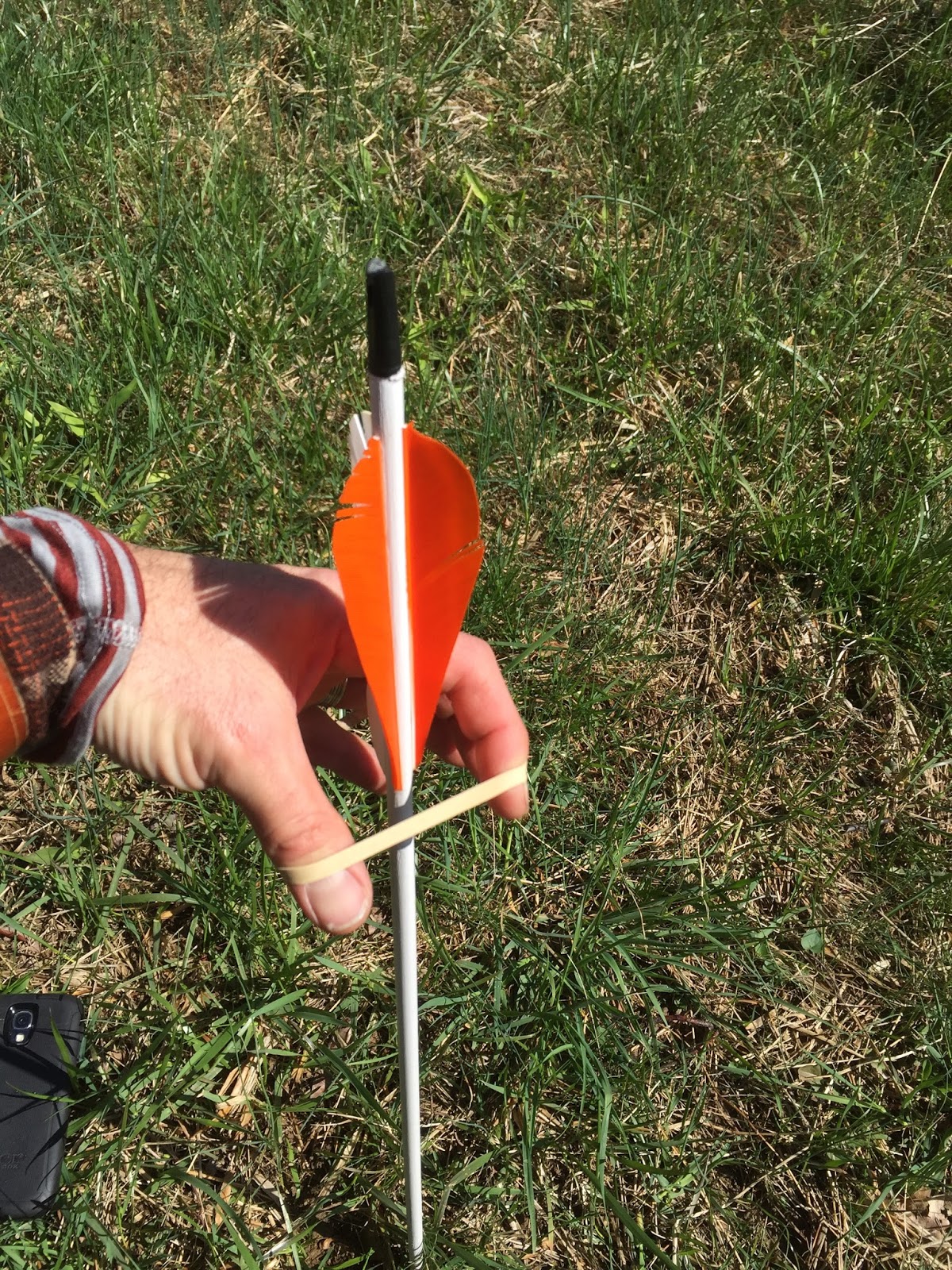
Now, with the advent of high quality cell phone cameras, I find it much easier to just carry my phone and take selfie photos using a simple rubber band.

A see a lot of pictures of folks that have rubber bands stretched on the hood of their bow quivers, a practice made popular by Fred Eichler to keep adequate string clearance with bulky sleeves, now there is another use for them.  I keep a few heavy duty rubber bands on my quiver string pouch, but it is so I can connect my phone to my arrow in order to get that hero picture.


It is quite an easy concept:

1. Stick your arrow in the ground

2. Put the arrow through the circle of your rubber band down to below the fletching

3. Place your phone against the arrow with the lens facing out (the fletching will help keep it in place and from rotating)

4. Bring the rubber band back over the arrow nock and adjust the angle using the screen.

5. Set the timer and your done!


I just love the simplicity of this system.


Tuesday, April 24, 2018

DIY Wood Arrow Squirrel Point

Squirrels are tough customers for the bow and arrow hunter.  Yes, I have killed squirrels with the standard steel blunt, but I have also lost quite a few I've hit hard.  

Don't get me wrong, I have no issue shooting the occasional broadhead at a squirrel, but that can get expensive if you plan to shoot a lot of arrows. 

I started trying to find an economical way to create effective squirrel hunting points for my wood shafts.  Squirrels are hard to hit, are fast, and the points needed to be inexpensive to allow "no-holds barred" arrow flinging at bushy tails.


They also needed to be quite blunt to not penetrate deeply into tree trunks and allow those elevated canopy shots up in the trees.

Squirrels have very tough hides though, and something extra was needed to help get through the hide even with heavy bows. 


After much testing, I came about using the augmented standard .38 / .357 caliber spent shell casing.  I slide the hull over the 11/32nd shaft and use a nail set spaced in 3 spots around the shaft to pinch/peen the point onto the shaft.  No glue needed.

I then drill a small pilot hole through the spent primer into the shaft, screwing in a short drywall screw only about 1/2 way down the cartridge.  I'll leave the screw head long enough to cut off with my mini cut-off saw and abrasive wheel / dremel, and then sharpen the protruding screw to a point leaving about 1/8 inch of sharp screw.  


Just long enough to get through the hide, but it will usually bounce or be easily removed, from a tree trunk.


It is also an effective stumping head and, unlike the expensive judo, it will not snag other arrows and is easy to withdraw from the back quiver. 

So when the deer are not cooperating, I'll turn my attention to the squirrels.


Thursday, April 19, 2018

Long Range Practice and Broadhead Tuning

One of the most valuable types of bowhunting practice in my opinion is shooting at distance with broadheads.

This practice method accomplishes and reinforces numerous positive aspects in your form, your equipment, and your confidence.

I have heard some grumbles at 3D shoots from certain individuals that the shot distances on some courses are unethical.  Why practice at those ranges if I never intend to take a shot at those ranges?


Well, let me tell you, life is not clean and perfect and sometimes things happen in the woods and it is best to be prepared.  You can see my experience when I found out first hand the value from long range practice:

The Long Shot Buck

I find the best way to accomplish this type of practice is against a hill and shooting into dirt or sand.  My house sits on a hill and this allows me to shoot in my side yard.  Once and a while, I will hit a rock and destroy a broadhead (BH), but I find enough value  in this type of practice that this loss is acceptable.  I keep a few of each type and weight broadhead reserved for dirt practice.  You will quickly learn which broadheads are the most durable.


 Long range practice will  do wonders for improving your form. You will quickly see the value in a stable bow arm, good release, and consistent anchor.  If you cut your BH arrows to your draw length like I do, you can use your BH touching your finger just like a clicker to check constant draw length.


Once you have your basic tuning accomplished, test your equipment by shooting your broadhead hunting set-up at distance.  By distance I mean at least your point on range (usually about 40-55 yards for most archers shooting split finger).

This accomplishes several things.  First of all you have the opportunity to see your arrow flight better.  More time in flight to notice any wobble or kick of the arrow.

Also, you can do some broadhead planing tuning of your hunting set-up.  If your arrows are grouping to the right of the target (right hand shooter), your arrow may be too weak.  If a majority of the shots are impacting left, your set-up may be too stiff.  Adjust point weights and see if you notice a correction.


The last great result of all this long range practice is confidence.  Shooting at distance will make you a more confident archer, make you more confident in your hunting equipment, and when that animal presents itself you will not doubt your ability or gear. 


Wednesday, December 27, 2017

Maryland Black Bear Hunt - Public Land Success and Taste Review


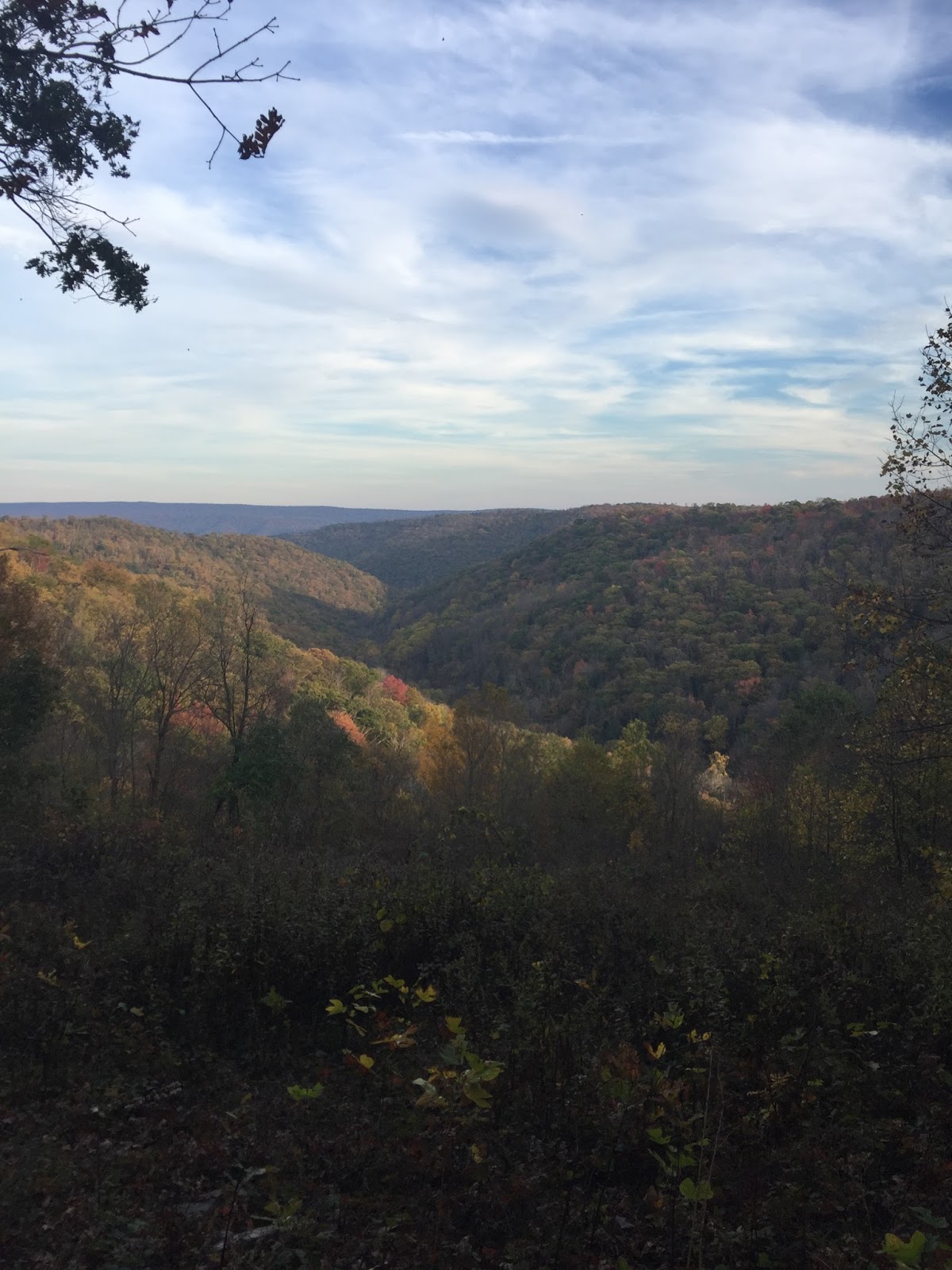
On a quiet overcast Sunday in 2017, this epic journey began.  We packed up the wall tent and 3 trucks with gear, to camp at New Germany State Park.  We would be hunting public forest in Garrett County, Maryland.   The campground is located off a bustling main road that travels into the popular Deep Creek lake resort.  I’ve driven past this public land often and wondered about hunting there.  The terrain always looked interesting, your typical Appalachian mountain topography.  The leaves were already half down and falling.  There were lots of yellows and browns and not a particularly vibrant fall color year there.  

The campsite loop we were on was small but empty.  Only one other camper was at the only site with electric hookup all that week.  They were there for some fall biking  We were living in style with access to a bathhouse complete with hot shower and flush toilets!   


After unloading and setting up camp, we scouted out this long drainage Mike had a tip about.  He knows some folk with private deer camps at the top end of the drainage that reported seeing more bear than deer sign on their cameras. We planned to enter at the bottom end of the drainage because of the prevailing wind direction.  Then, a long hike would take us into the area after 3 or 4 miles.  Scouting told me things were crunchy and loud, so I decided to hunt with the rifle for at least the first day until things got wet and quiet. I would be using the WWII 8mm bolt action Mauser K98 with open sights.  I didn’t have a chance to sight in the scoped 7MM Mag that I got from dad for the hunt.  I had killed a deer once with the Mauser though.  
Monday morning arrived and we were in for a cloudy and breezy day.  The forecast was calling for some rain in the afternoon, continuing with a significant chance the next three days.  We were hoping to get in and shoot one while the weather was good…yeah right.  


The morning was pleasant as our hike took us up into the drainage.  I decided to break company midway through, and hike up the opposing mountain to run the ridge looking for sign.  I picked a bad spot to get higher in elevation.  The entire hillside was clogged with rhododendrons.  They are real thick shrubs with wide leaves growing downhill and making it very difficult to penetrate.  I was glad I did not wear my extra wool layer, as exertion started to overheat me quickly.  I had to crawl more than halfway on my hands and knees through deer tunnels in the bushes.  I finally got up top of the growth and found a logging road.  Two fat does spotted me moving and one snorted for about 15 minutes.   She would run ahead and keep only her head above the crest of the terrain.  Smart.  There was no sign up top.  After sitting a little on a thick finger that had a ton of deer sign and eating an apple, I headed down an open draw past some rock outcroppings and caves. Glassing the openings, I was hoping for a black face to appear.  No bear sign at all…no poop, no torn-up stumps, overturned rocks, and no tracks.  None of us saw anything but deer sign.  As I was waiting for the others, it started to rain pretty steady.  I hunkered down under my poncho… the rain was here.


We scouted out another spot in the evening, this time higher in elevation.  More rocks and a nice access road we can enter in on.  We were hoping things would look up.  The rain never really let up though, and by bedtime it was a full out torrential downpour.  We were very glad we had the wall tent.  The roaring of the rain even drowned out Brent’s snoring!  We were cozy and dry with the woodstove roaring steadily. 

By morning the rain had stopped and I decided I would hunt with the longbow and shoot one of those deer if I had the chance.  

As we were about to make a left into the parking area, a local whizzed up and made the right ahead of us into the trailhead parking area. Now,  I know we didn’t have the turn signal on yet, but c'mon!  Mike was HOT!  The other guy finally comes over and kindly asks us where we were planning on hunting.  He eventually says he is hunting the other side, where we had to park (the access road ran across the main road here).  Great! We took his side as planned, maybe he realized he zoomed in there ahead of us?  Over the course of the entire four day season, we only saw 4 or 5 other trucks hunting.  This seemed crazy as 1,500 tags were given out and most everyone hunts Garrett County during the bear season.  I suppose  most hunt private lands.

Anyway, we head back a few hundred yards and wait for daybreak.   The access road ran just inside of a steep rocky ridge on our left side, lots of boulders on the right side fading into Mt. Laurels eventually to some private property below.  I decided I would break off and start my hunt around those rocks. 

The other two continued down the road a bit.  After daylight began to filter through, I saw the typical Allegheny mountain terrain I was used to.  Thick mountain laurels with rocks and small trails dispersed between.  I snuck a little through the laurel and immediately saw a fresh bear poop!  OK, now we are talking!  If one comes out here it will likely be inside of 15 yards.  I was feeling glad I had the bow, and I slowly still hunted.  It was breezy and peaceful, great still hunting weather.  There was a lot of deer and buck sign also.  I was in the zone….  Then, BANG!!  Mike crackled over the radio “BEAR DOWN, BEAR DOWN, BEAR DOWN”.  


The large sow came up across the steep ridge and passed right between where Mike and Brent were.  It was about 50 yards from Mike and he didn’t hesitate.  He hauled up his new Tikka 30.06 and shot it through the shoulder. It dropped on the spot and flopped.  The bear had a metal ear tag #1075 and it was a nice sized bear!

Now, the work began.  Brent and I cut some small trees to use as poles so we could construct a litter with Brent’s jungle hammock and 550 cord.  It worked well, but was still slow going.  I quickly returned to the truck with the other’s packs and rifles, while they carried the bear about 10 yards at a time toward the access road.  From there, it would be two miles back to the truck. I dropped off the gear and came back to help carry, bringing them some water.  It went quicker with 3 people.  Still, he shot the bear at 7:30 AM and we didn’t get out to the truck until 11:15 AM.  


Brent and Mike took my truck to get it checked in while I cooked lunch…  Bear heart and eggs with home fried potatoes and onions.  We were starving, but the heart was excellent eating.  Better than deer heart, and we have eaten a lot of deer heart over the years.  At check in, they said she was a 5-year-old female that was tagged as a cub about 7 miles away from the kill area.  She was not lactating and had no signs of being with cubs.  She was missing an incisor tooth, but in general good health otherwise.  She dressed out at 193 pounds and they said it was the largest bear checked in to that point at that station.   They were really impressed it was taken from public land.


After lunch, I gave Mike my truck keys and he drove back to Frederick to find a taxidermist to skin the bear and deal with its really nice thick hide.  We were in a hurry so the hair did not slip.  Brent and I would hunt deer in the evening and keep camp until he returned Wednesday morning.  Unknown to us, Mike had a hard time finding a taxi to deal with it, so he ended up skinning it himself with some phone advice from a guy.

Brent and I went back to the scene of the crime to hunt deer that evening.  It was very windy.  I decided to play peek-a-boo over the rocky ridge by peering over the edge every 50 yards or so.  The second time I peeked, I saw a big hawk take off down below and I caught movement simultaneously to my right as a bedded doe saw the same thing.  She stood up with a yearling doe about 30 couple yards away.  I tried to creep closer, but lost her behind some big trunked trees.  I made it to the ridge, but I could not drop down to get closer.  The wind was blowing in her direction and the rocks were very loose going down.  I eventually saw that they both bedded down again.  I had to wait them out.  About 20 minutes later, She got up and started feeding slowly slightly away.  Oh well, now or never.  She was a big old doe and if she gave me a shot I would take it. Finally, she fed into an opening.  I drew and released but my arrow shanked left and struck one of those large trees before getting to her.  She blew out to the right and the yearling ran left closer to me.  That one was now about 25 yards downhill and broadside.  Oh well…  I drew another arrow and released and this time I saw the arrow flail sideways and I knew I hit this time.  It ran in a circle downhill and out of sight.  A couple minutes later, I see a deer about 60 yards away by a big log….no sign of being hit?  Not sure if that was the little one or another deer?  I was calling Brent on the radio to tell him what happened, when the big doe came back looking for the little one….it paused about 30 yds away and I shot again….  This time I hit another tree trunk about halfway between us…terrible shank…c’mon Greg Concentrate!  The doe took a bound and stopped in the open again…30 couple still.  I really bore down this time and I see the arrow arc right for the goodies!  It looks great!  Then the arrow smacks into an unseen 1 inch diameter branch and stops cold about 5 feet before the vitals…. That doe has a golden horse shoe! 

So now I am sitting there shaking with excitement and holding my last broadhead arrow against the bow.  Crazy! 


After a bit, I find the arrow laying on the leaves pointed back toward me.  Blood, but only on one side of the white shaft.  Some white hairs on the BH and the top of the fletch and nock area covered in blood and fat.  Crap…not looking good.  Started trailing dark red muscle blood.  Steady drips but nothing crazy except where it stood still occasionally.  Trailed it for about 200 yards…it doubles back twice…crosses the ridge once and blood shuts down as it crosses back a second time.  It is getting dark and I know the story.  Deer never bed.  When I saw the arrow go sideways it wasn’t a crappy release as I first thought, it was me hitting low on the brisket.  Glancing hit.  Deer will be fine.
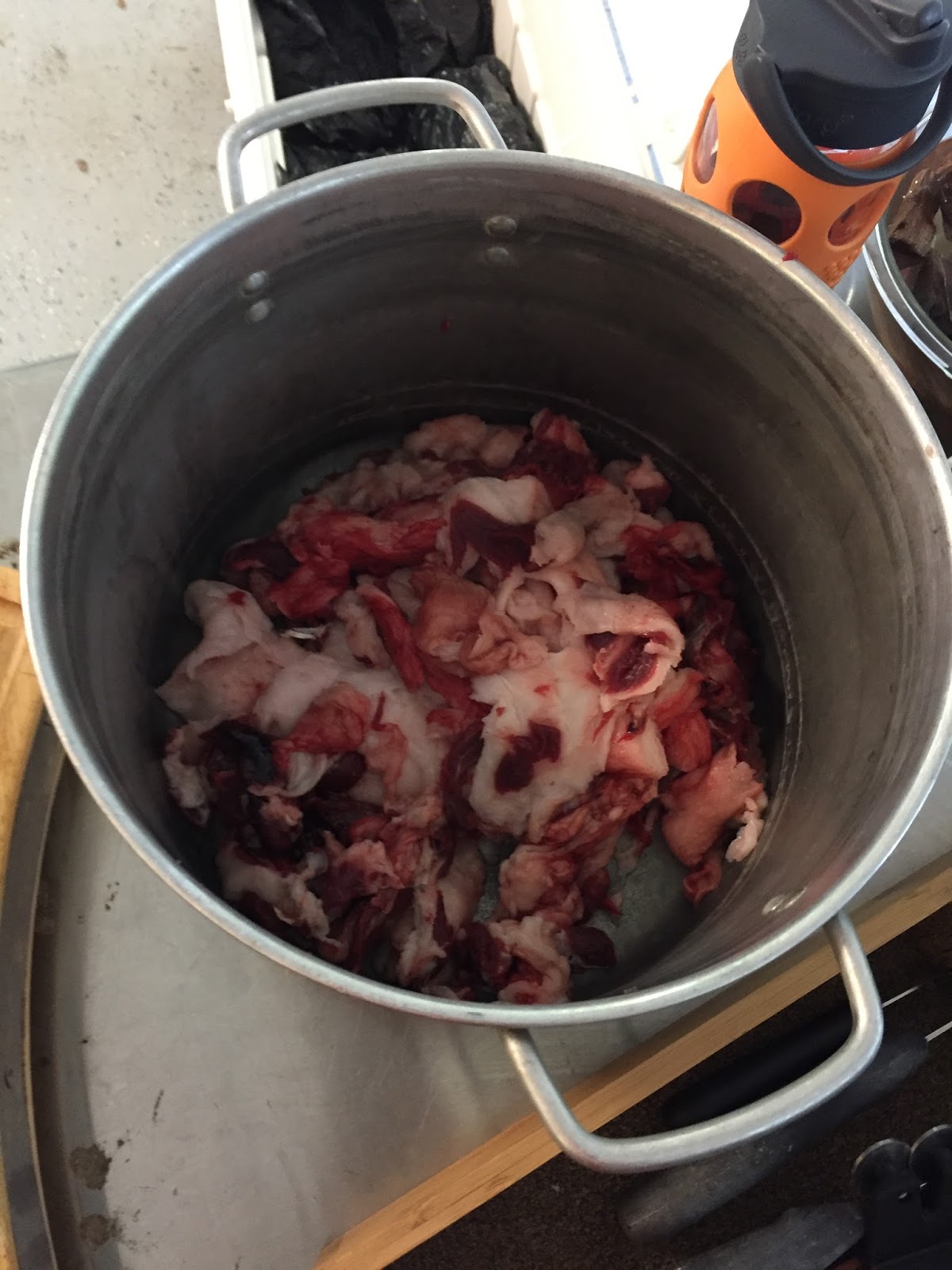
Mike got back Wed. morning and we broke camp…headed back home to butcher the bear.  While it was being cut I smoked a side of the ribs, and had pots full of bear fat to render bear grease.  I collected the grease in mason jars and it smelled like bacon as it was on the grill stove.  The grease will make a good leather treatment for back quivers and boots as well as a super cooking oil.


Not having much experience with bear meat, we were happily surprised.  She had almost no odor.  Deer smell much worse while butchering.  The meat and fat is real squishy.  The burger was like twice ground mush coming out of the grinder.  The heart tasted better than deer.  The smoked ribs were real tasty and the fat tastes good unlike that chalky bitter deer fat.  The tenderloin I cooked was super!  Way better tasting meat than deer.  It is up there with elk, and a lot more tender then any undulate I have had.  A sweet mild flavor.  I have been told the bear's diet plays a major role i the quality of the meat. 

Mike donated me a back foot and I took the claws out.  Maybe some bling for my quiver or something.

Now that we got one with the gun, I think I’ll be concentrating on getting one with the bow if any of us draw another tag in the future. 


Tuesday, December 5, 2017

Bob Swinehart: Life on the Edge


A young boy in a little rural town in Pennsylvania fashioned a bow and arrow from a hickory branch and some binders twine, and embarked on a lifelong love of the longbow. After going to the movies with his sister and watching the legendary Howard Hill in a short film, a dream was fostered that eventually pulled him to the dark continent of Africa and an epic quest. He would go on to accomplish something the great Howard Hill himself could not, the first archer to take all of Africa's dangerous Big-Five (Elephant, Buffalo, Rhino, Lion, and Leopard) with the elegant longbow. Before departing for his first safari Howard wrote Bob a warning, “Be careful, every animal in Africa can kill you.  Good luck.  - Howard Hill” 


Robert N. Swinehart is probably one of the most overlooked and least known bowhunting legends to most younger hunters.  There is an anemic amount of information on the web, his books are long since out of print, and existing examples are sought out by collectors and above of the price range for most average folks. This scarcity of information, combined with a stigma surrounding his untimely and early demise, has placed a veil of fog around the man whose extraordinary bow hunting tenacity and success had him featured in "Ripley's Believe it or not". He was the first man to down a 3-ton black Rhino with his 90-pound Hill style longbow.  His reputation for taking risks in fulfilling his goals was not unfounded, and the resulting hunting stories are legendary, edge of the seat, entertainment that deserves to be retold. 

That Rhino was in fact the second black Rhino Bob had arrowed on a previous safari. The first such encounter ended in a hail of rifle fire. Despite a lethal hit, the beast charged and slid to a thundering stop in a cloud of dust a scant few yards from Bob’s feet.  He would have to travel back on another safari to collect the rhino without the interference of a rifle.  That second rhino was not without another helping of white knuckle terror.  His first stalk attempt on this hunt resulted in yet another charge.  The wary nearsighted animal detected the click of the cameras behind Bob as he moved into final shooting position.  The irritable battle wagon immediately swapped ends and charged. Bob scrambled to reach the sanctuary of a large tree 10 feed to his rear.  Only the twin blasts from the white hunter's large caliber rifle blowing dirt into the rhino’s face, distracted the brute enough to avoid disaster and convince the Rhino to give up any follow-on aggression. 


The second attempt on this safari continued to fray nerves.  Particularly tall foliage that year made spotting difficult, but the trackers were able to locate a large rhino in the cover of very tall grass interspersed with dense thorn bushes.  The cover was so impenetrable that the Rhino heard the team approach and charged!  Expecting the brush to part and immediately come eye to eye with instant death, the team was relieved when the thrashing and crashing sounds were moving away instead.  Now on alert, the trackers again caught up with the beast, only to have the exact same scenario play out again.  After, several more similar follow-on attempts, Bob was getting frustrated and I imagine quite fatigued from the stress.  

 Bob began to wonder if collecting a rhino without the aid of a gun was even possible.  He had not so much as a glimpse of the rhino before it would detect the group and break into deeper cover.  Bob was the fourth person in line and he decided if he was ever going to get a chance to shoot, he needed to be up front.  The white hunter protested vehemently, knowing that there would be no chance to protect him if the rhino decided to charge.  Eventually he relented and allowed him to go in first. The nervous bowhunter picked his way through the tall grass and thorn bushes until he finally spotted the exceptionally large horned rhino.  It was about to walk out of a narrow shooting lane and move into even thicker cover once more.  Instinctively and immediately, he swung up and loosed his shaft in one smooth motion.  At that exact instant the rhino turned to charge and the standard Howard Hill broadhead glanced off the its chin and harmlessly into his heavily boned front shoulder.  The weighty 1200 grain custom steel nocked microflight shaft repeatedly slapped the animal in the face as he ran toward Bob.  This distracted the enraged male enough that it slightly slowed and spun to horn at the shaft.  Bob immediately took this opportunity and had another arrow on the string. His quick follow up shot in those brief moments allowed a lethal hit to both lungs.  I personally have no idea how he stood his ground in that situation.  The rhino ran away and was found a short distance later as history was complete. "Believe it or not"!


In later interviews, Bob would always say the African elephant was the most dangerous to hunt.  This 7-ton leviathan towering 12 feet high, with feet the size of Bob's two boots heel-to-toe, 5-foot long tusks, and a trunk that could reach 10 feet and crush a man with one blow, was the pinnacle of achievement with the bow and arrow.  His gear was specially modified for the task including 36-inch long solid fiberglass arrows with steel nock and long shanked custom points launched from a 100-pound longbow.  This combination would require him to be very close before gravity overtook the weighty missile.


Hunting in Mozambique, after an exhausting track, Bob was able to race from cover, close to within 15 yards of a bull, and launch an arrow into the chest of the elephant.  As it was departing, another shaft quickly impacted close to the initial.  Bob approached as it appeared the bull was about to keel over at any second, but instead the elephant turned and charged.  Sidestepping the angry locomotive, Bob hastily poured in another shaft grouped tightly in the kill zone just as the behemoth began to collapse (amazing accuracy under the circumstances).  Bob was able to scratch the elephant from his big-five list. He was not completely satisfied however, as he wished to prove that one well-placed arrow could do the job even on a creature with the enormity of the African elephant. He planned a return to Angola to try again with the mighty pachyderm. 


One early morning at a water hole his trackers were able to find the fresh sign of a large bull and begin a long and arduous track.  Eventually joining up with several smaller elephants, the party caught up to the herd only to have the wind shift and scatter them.  Tracking again, he became puzzled why his trackers were following a smaller set of prints.  In broken English, the lead tracker indicated that "this is the shortest way", and the bull would soon join up with this smaller animal with the wind in their favor.   The strategy worked, and soon the big black colored form of the hulking bull emerged at the tail end of the herd in perfect position for a stalk.   Closing the distance from 75 yards, Bob ran between cover until ultimately sprinting out into the open from the quartering away side of the bull.  At 22 yards the elephant saw him as he was drawing, but it was too late.  The lone shaft buried to the fletching.  Instead of charging, the gigantic beast lumbered off and away from him breaking brush and kicking up dust.  He had done it with a single arrow. 


His encounter with the first Cape Buffalo, nicknamed the "black death" for its propensity to trample and seek revenge on those who wish to invade its personal space, was likewise a hair-raising situation.  While traversing some broken territory in the land rover, the group managed to drive among a huge swirling black herd.  Scattering groups in all directions, Bob jumped out of the vehicle and attempted to sprint up to the edge of a large gathering as they passed.  His backup hunter could not keep up as Bob skidded to a stop and immediately drew and released a shaft just as the last stragglers in this particular pack passed inside of bow range.  Picking out an individual and compensating for a lead, the arrow streaked across the 35-yard distance and striking the buff in the jugular vein.  He watched the beast crumple and disappear into a roll, swallowed by the dust of the panicked herd.  Success, but now he and his hunter were about to be cut off from the refuge of their vehicle by a second group approaching fast from behind them.  Quick feet and thinking allowed the two to reach a tree as the black beasts flooded around, passing within feet on either side of the tree.  Luckily, no harm was inflicted as the last stragglers roared passed and Bob was another step closer toward his goal. He ended up killing several more buffalo on subsequent safaris.


Although not listed as one of Africa’s Big-Five, the hippopotamus is responsible for killing more people than any other mammal in Africa. It is 3rd in size behind the elephant and rhino.  Though not one of the official Big-Five, Bob was also planning to collect one of these beasts with the longbow.  It would do much to further promote the notion of the longbow’s lethality.  Hippo hunting is seriously dangerous business. They tend to charge without provocation.  Bob was walking atop a mat of floating papyrus reeds at the edge of 8 feet of water, when he spotted a line of bubbles streaking toward him.  Knowing it was a hippo that would soon emerge, he readied for a quick opportunity.  As soon as the head broke water the arrow was on the way and it struck home as the gigantic mouth turned for him.  Behind Bob another explosion of rifle fire rang out.  The white hunter fired a bullet into the brain of the animal stopping him cold at only 3 feet, certainly saving his life. Bob was never able to collect a hippo without aid of the rifle.

Only the Leopard and the lion remained unfilled on Bob’s list.  Coming into the bait in the last few seconds of visible light one evening, after of series of uneventful ambushes, the wary leopard emerged and climbed into the bait tree.  Bob was perched in an adjacent tree just 10 yards distant and slightly lower.  The only way he could even still see the cat in the fading light, was that it was backlit by the last vestiges of dusk.  His shot from the Ben Pearson recurve he was testing and promoting was good, and after a few tense moments of the cat wildly snarling for the source of the threat, it finally retreated.  Melting back into the forest leaving an eerie silence.  The wiry sleek cat weighed an estimated 175 pounds and was found nearby the following morning.


The lion proved even more dangerous.  After many safaris under his belt, Bob had yet to have a crack at the lion king.  Finally, while the team was attempting to free their vehicle from the mud, a group of vultures was spotted circling several miles away.  The crew took a chance it could be a lion on a recent kill.  As they drew closer, tall grass obscured any vision of the area. Surrounded by high trees, perched carrion birds were up high waiting for something.  At about 35 yards, the grasses parted and Bob was confronted with a male lion facing him dead on.  Despite the poor choice of shooting position, and thinking this may be his only chance, Bob unleashed a quickly aimed arrow that struck the lion in the chest.  Reacting to the hit, the lion reared back, snarled, and broke for heavier cover about 50 yards distant.  Now pursuing the injured beast, Bob cautiously began to infiltrate the thicket where the feline entered moments earlier.  The cat again emerged at a distance it could easily cross in seconds.  Without hesitation, Bob rocketed a second arrow that struck at the base of the lion’s neck.  The whirling feline snarled as it bit at the shaft and melted back further into the tall grass.  Guided by sound alone, he loosed three more shafts blindly cutting into the tall grass.  Then all went silent.  After a while, he judiciously eased into the clump and found the king of the savanna…. dead.  The final three arrows resulting in a superficial head glance, a flank hit, and a miss.  The cat weighed 510 pounds and was 9 feet long.  Bob had severed the heart with the first arrow.  The big five was complete, and he managed to survive.


Upon returning home, one of Bob's North American harvests proved to be even more dangerous. One hunt in particular almost completed what the African game could not.  Bob had a propensity for climbing and shooting from trees.  In a practice not yet considered common place in that era, and before modern tree stands and safety equipment, Bob would often hunt from the trees and simply lay across the top of branches.  He would shoot with his string hand under the "balance beam" he was perched atop.  This habit was likely the spawn of the Howard Hill nickname of "Bobcat" Swinehart.

During a particular mule deer hunt, Bob was alerted by a local control officer about a rouge black bear that was killing cattle in the area.  The officer offered Bob the chance to hunt the bear with his bow, and he quickly took him up on the offer since he possessed the tag.  The dogs managed to track and tree the bear from a recent calf kill to a tall fir tree.  The bear was high up in the dense evergreen, and no matter where Bob positioned himself the only view of the bear was that of the head and neck through a very tiny opening.  He took careful aim at the neck and his arrow found its mark. The shaft somehow snaked around all vital arteries and spine and resulting in a non-lethal hit.  The bear climbed higher up into the tree out of view.  Without much hesitation, he decided to start climbing the 70-foot-tall tree to get another shot into the bear who was now perched near the very top.  Bob wove his way up to within 10 feet of the bear, and wedging his feet while leaning back against a branch, was able to draw and loose a good hit into the bears lungs.  A second insurance arrow was just as accurate, and the bear began to lose his grip on the branches.  Thinking the bear was all but dead, Bob began to descend.  Miraculously, the 600 pound blackie regained its strength, pulled himself up and began to pursue Bob down the trunk in a deadly race.  Gaining on the human pest somewhere around 50 feet up, Bobcat had just enough speed to slide over to a thin limb as the bear's back legs nearly dropped down onto his shoulders.  An even thinner branch gave him some stability at waste height, but the branch under his feat began to sag close to the breaking point.  Bob's bow and quiver hung uselessly by the bear's feet.  One swipe from the bear would mean certain death, and yet there he was an arm’s length from the bear as it stopped and looked him in the eye.  Bob's only option was to try to bluff the wounded beast and stand his ground.  If that didn’t work he would jump and hope his injuries would be non-lethal.  Bob began a steely eyed stare-down into those big black piercing eyes and both hunter and prey froze for what may have only been 5 seconds, but felt like 5 minutes.  Suddenly, the bear wavered and crashed down through the branches to his death.  Upon reaching the safety of the ground, Bob realized the entire seat of his pants were torn away.  He never did know if it was from the sharp branches, or if the bear was closer then he realized.  That bruin was large enough to be entered into the Pope and Young record book.


The great Howard Hill regarded Swinehart as,” the best big game hunter I have had the pleasure of being with, on the trail and in the bush.”  Howard also said, “My only criticism of him was that he took too many risks. Somehow he survived Africa after a score of near burials." I would say Howard had a point, but what a story!